Friday, June 8, 2012
Monday, June 4, 2012
Tokyo Ramen!
We must mention ramen after a trip to Japan. Japanese ramen is nothing like the packaged dried block of noodles you find in the grocery store.
www.ramenate.com
www.goramen.com
A movie called Ramen Girl (Brittany Murphy) actually does a good job of depicting the process involved in learning how to make good ramen and what it means to run a ramen shop.
Ogikubo is actually the birthplace of Tokyo Ramen, which tends to use more fish along with pork in making the broth, than just pork. This makes the broth clearer and lighter, but may be too fishy for those sensitive to the flavor. The 2 famous joints in Ogikubo are Futaba and Haruki-Ya. As CNNGo puts it, "If you could only visit one of the thousands of ramen-ya in Tokyo, Harukiya in Ogikubo should be it." Ogikubo also has a non-traditional ramen shop called Taiyo Ramen where they use tomato and chicken as the soup base. They also top the bowl with unusual ingredients such as cheese, eggplant, garlic, etc. making this place one of my all-time favorite restaurants in the whole wide world. My friends agreed, as they wanted their last meal in Japan to be at Taiyo Ramen.
For our Kansas City friends, the closest place to get real ramen is at the Japanese restaurant Sama Zama in Westport. This place offers the flavors of Japanese homestyle cooking that I grew up with!
Sunday, June 3, 2012
Day 30: Japanese Baseball - Tokyo Yomiuri Giants
It's baseball season in Japan, too, and they are nuts about baseball. We bought tickets for a Tokyo Yomiuri Giants home game against the Rakuten Eagles at the Tokyo Dome. Purchasing tickets is a relatively simple process...if you can read Japanese. Even today, online transactions are limited in Japan; therefore, all sorts of tickets, including baseball tickets, are sold through kiosks located in many of the convenience stores such as Seven Eleven, Lawson, etc. If you go to the convenience store when it's not crowded, I bet the store clerk will be able to help with operating the kiosk. Once the tickets are selected, take the paperwork that gets printed from the kiosk to the cash register where the clerk will hand you the tickets, once they are paid for. Our tickets were mid-range on the second level for ¥2400/seat. Nose bleed seats start somewhere around ¥1000, but you could also spend more than ¥6000 for better seats.
Going to a baseball game is mostly a universal experience. However, here are a few observations that stood out:
1. Although they don't allow glass or plastic bottles inside, you are allowed to bring in your own drinks, which are then poured into plastic cups for you at the gate.
2. Of course the concession stands serve Japanese food such as rice bowls, fried noodles, sushi, etc. but we did see a good share of hot dogs and French fries, too.
3. We loved the cute beer girls running up and down the stands with a pony keg strapped to their back. How efficient is that? They literally came by every few minutes, and there is no last call after the 7th inning!
4. Tokyo Giants' mascot is called a "Jabbit"...a Giants-Rabbit. Huh, 'interesting.'
5. Yes, the Tokyo Giants' name, logo, and black/orange colors resemble the San Francisco Giants because they copied the Giants' team when they were still the New York Giants.
6. We love that one of the pitchers is named Kubo #11! He's off for elbow surgery, however. Too bad.
7. They also do a 7th inning stretch, but to different music.
8. Hello Kitty was at the game. She's everywhere in Japan, I swear.
9. We witnessed a no-hitter game! Congratulations to the Giants!
(Note the "Jabbit" mascots and Hello Kitty running around!)
We stuck around the Tokyo Dome City area after the game for some late night snacks and drinks. We found an American baseball themed restaurant where we proceeded to order several 'yards' of beer!! In our defense, it's on the menu and there were 6 of us, but this amused many of the Japanese customers as they took pictures of us. Glad we could entertain.
Day 30: At One of the World's Largest Fish Market - Tsukiji
A trip to Tokyo would not be complete without witnessing the sheer volume of wholesale seafood available at one of the world's largest fish market in the world in Tsukiji, Tokyo. This place has been operating as Tokyo Central Wholesale Market, “a Kitchen for 12 – Million people in Tokyo" since 1935, but a fish market has been in existence at this location for over 400 years. There are also fruit, vegetables, dried goods, and specialty shops in the Outer Market, as well as sushi restaurants that open at dawn to feed the hungry fishermen and tourists for breakfast.
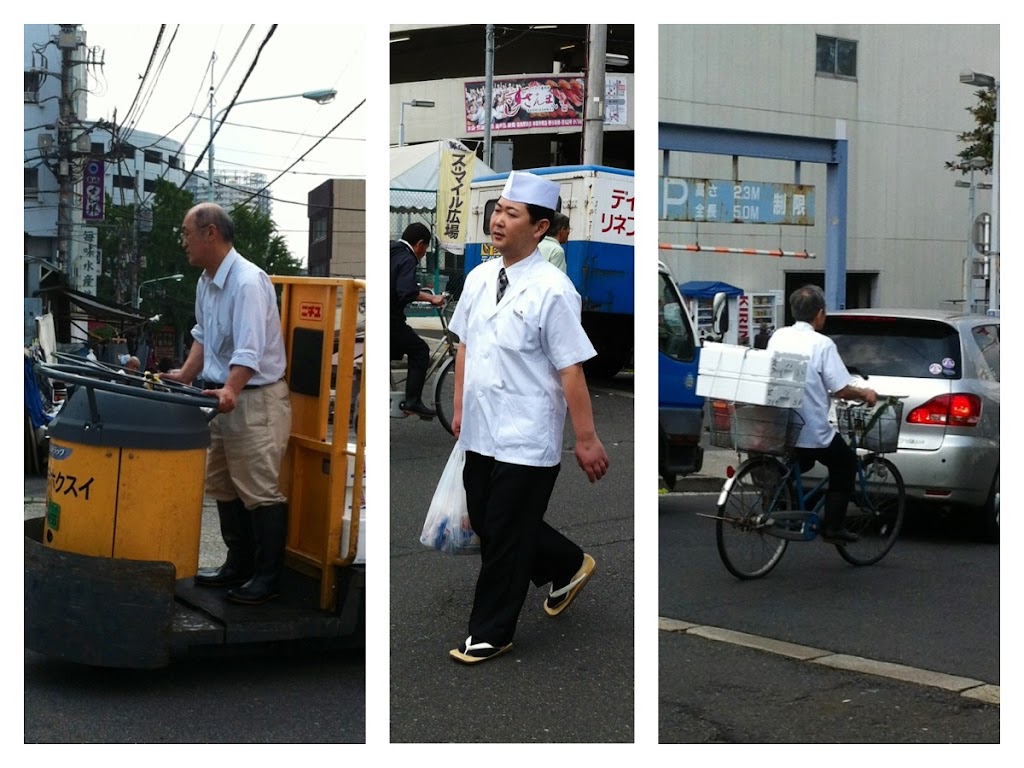
Mike and I have visited Tsukiji several times, but this may be the last because the Wholesale Market is scheduled to move about 3 miles across the waters to Toyosu into a more modern facility by 2014. People conduct serious business at Tsukiji, and has never been designed to accommodate the volume of tourists that descend upon this market every morning. Surely, the move to Toyosu will take tourists into the consideration of their design; yet, I already feel a loss for the rows of dank warehouses, navigating the endless confusing maze of wholesalers, motorized carts trying to run us over, grumpy fishermen staring us down, the disapproving look when we try to take pictures, and simply just trying (without much luck) to stay out-of-the-way. After a guarded walk through the Inner Market, we can't help but feel like we conquered a life-size game of Frogger. We then reward ourselves with a huge helping of the freshest fish we will ever get our hands on at any of the myriad sushi counters.
A great explanation of what to expect and proper tourist etiquette is written through JapanGuide.com.
Note that the famous tuna auction is closed to the public. Tourists who want to see the auction must apply for a visit starting at 5 am. The first 120 applicants are given access. Needless to say, we haven't been THAT motivated to witness this event, although it could be an excellent way to make use of the jet-lag!
Mike and I have visited Tsukiji several times, but this may be the last because the Wholesale Market is scheduled to move about 3 miles across the waters to Toyosu into a more modern facility by 2014. People conduct serious business at Tsukiji, and has never been designed to accommodate the volume of tourists that descend upon this market every morning. Surely, the move to Toyosu will take tourists into the consideration of their design; yet, I already feel a loss for the rows of dank warehouses, navigating the endless confusing maze of wholesalers, motorized carts trying to run us over, grumpy fishermen staring us down, the disapproving look when we try to take pictures, and simply just trying (without much luck) to stay out-of-the-way. After a guarded walk through the Inner Market, we can't help but feel like we conquered a life-size game of Frogger. We then reward ourselves with a huge helping of the freshest fish we will ever get our hands on at any of the myriad sushi counters.
A great explanation of what to expect and proper tourist etiquette is written through JapanGuide.com.
Note that the famous tuna auction is closed to the public. Tourists who want to see the auction must apply for a visit starting at 5 am. The first 120 applicants are given access. Needless to say, we haven't been THAT motivated to witness this event, although it could be an excellent way to make use of the jet-lag!
Subscribe to:
Posts (Atom)